

Beyond WIMPs
Low thresholds and multiple signal channels provide sensitivity to light dark matter, axion-like particles, dark photons and other non-standard interactions.

XLZD is developing a next-generation liquid-xenon observatory to search for dark matter, neutrinoless double-beta decay, neutrinos and other rare processes.
Explore the scienceDark matter is the invisible component of the Universe whose gravity shapes galaxies and the large-scale cosmic web. Its existence is clear from many observations, but its microscopic nature remains unknown.
Dark matter does not emit, absorb or reflect enough light to be seen directly. We infer it from its gravitational effects on stars, galaxies, clusters and the early Universe.
There is roughly five times more dark matter than ordinary baryonic matter by mass, and it provides the gravitational scaffolding on which cosmic structure grows.
Whatever dark matter is, it must survive on cosmological timescales and interact only weakly enough with ordinary matter to have escaped direct detection so far.
No known Standard Model particle can account for the cosmological dark-matter abundance. Detecting a non-gravitational interaction would reveal physics beyond the Standard Model.
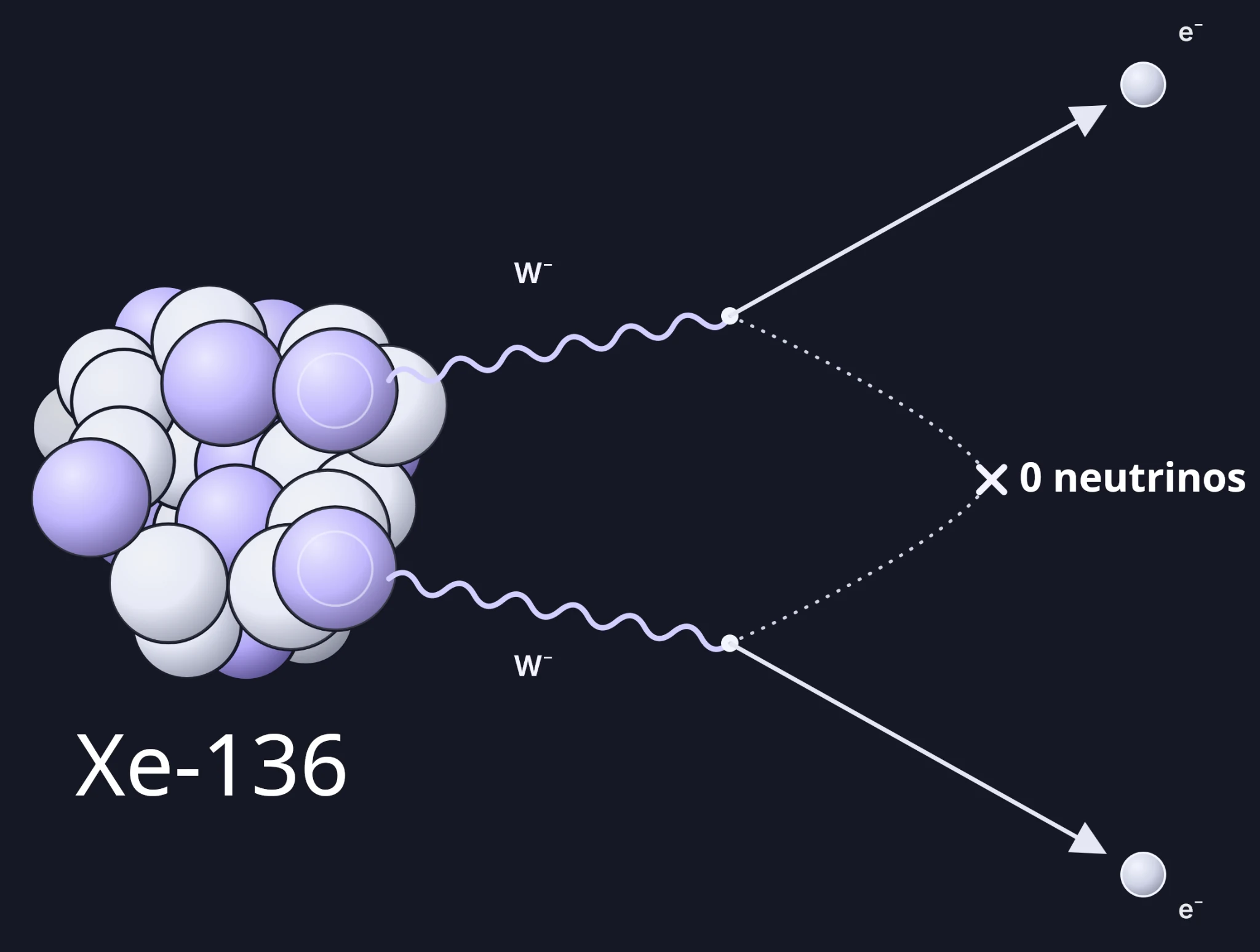
Neutrinos hardly interact and remain among the most mysterious particles in the Universe. In neutrinoless double beta decay, two electrons would be created with no antineutrinos. Observing this process would show that neutrinos and antineutrinos are the same particle and could help explain why our Universe is dominated by matter.
Neutrinos are the most abundant known massive particles in the Universe. About 100 billion neutrinos emitted by the Sun pass through an area the size of your thumbnail every second.
Neutrinos are the only known fundamental spin-1/2 particles that do not carry electric charge.
Neutrinos weigh less than one millionth of the lightest electrically charged particle, the electron.
According to our physics models, the Big Bang should have produced equal amounts of matter and antimatter. Our existence shows that a process must exist that favours the creation or survival of matter over antimatter.
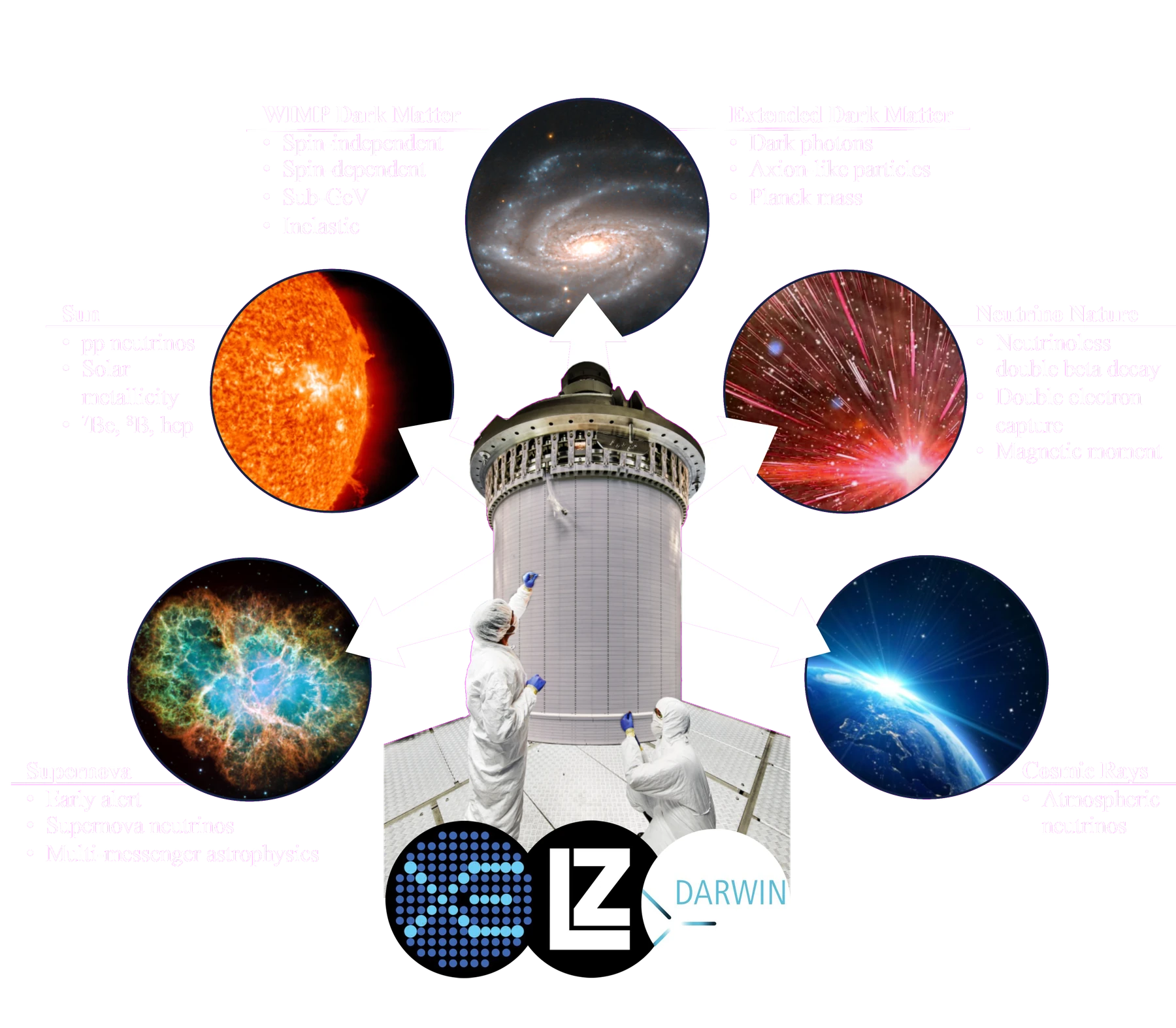
A very large, ultra-low-background xenon target can search for dark matter while simultaneously enabling competitive neutrino, double-beta-decay and rare-event physics.
Read the XLZD Design BookIts large xenon target, low threshold, three-dimensional reconstruction and ultra-low backgrounds make the detector sensitive to complementary questions across neutrino physics, astrophysics and new-physics searches.
Low thresholds and multiple signal channels provide sensitivity to light dark matter, axion-like particles, dark photons and other non-standard interactions.
Measure solar neutrinos through electron scattering and coherent nuclear scattering, including the abundant pp flux and higher-energy B-8 neutrinos.
Probe neutrino properties and interactions, including neutrino magnetic moments and other non-standard interactions.
A galactic supernova would produce a burst of neutrino-induced nuclear recoils, contributing to rapid alerts and multi-messenger astrophysics.
Selected XLZD publications, enabling R&D papers and public conference presentations. Use the toggle to switch between talks and publications; the four most recent entries in each are shown by default.
Public conference presentations, newest first. Four entries are shown initially.

Radiopurity, cleanliness and contamination-control requirements for the next-generation XLZD observatory.

An overview of XLZD’s science goals, detector design and R&D programme, including dark matter and rare-event physics.

A joint LZ/XLZD presentation connecting current-generation liquid-xenon results with the next-generation observatory.
Projected XLZD sensitivity to low-energy electron-recoil signatures from neutrino electromagnetic properties, axions and other new-physics models.
A dedicated overview of XLZD’s neutrino programme, including solar and astrophysical neutrinos and neutrinoless double-beta decay.

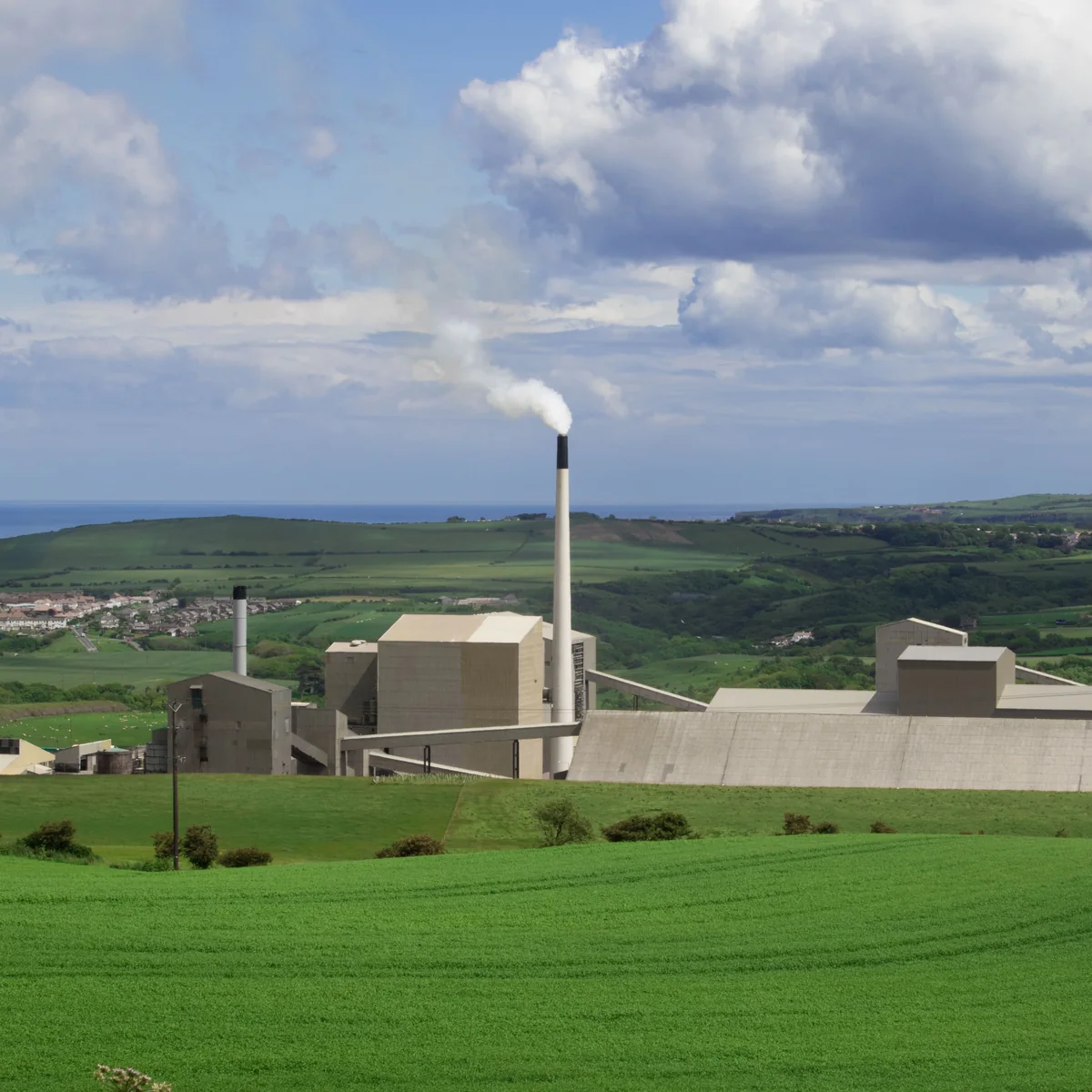
A presentation of the XLZD concept in the context of a potential Boulby site, including detector and infrastructure considerations.

A short presentation of preliminary XLZD sensitivity projections for low-energy electron-recoil new-physics models.

The principal XLZD science cases, with emphasis on WIMP dark matter and neutrinoless double-beta decay.

A status overview of the collaboration, detector concept and ongoing R&D towards XLZD.

An overview of XLZD and the large-scale DARWIN R&D programme supporting its detector development.
A broad introduction to XLZD as a dark-matter and rare-physics observatory.
A discussion of environmental sustainability considerations for hosting and operating XLZD at Boulby.
Simulation studies supporting the design and performance of the XLZD outer detector.

An introduction to XLZD’s prospects and physics goals as a next-generation liquid-xenon rare-event observatory.
A concise overview of the XLZD collaboration and next-generation liquid-xenon detector concept.

An overview of XLZD’s dark-matter reach and the R&D challenges associated with scaling liquid-xenon TPC technology.
An overview of the large-scale DARWIN R&D programme addressing the technical challenges of a roughly 60-tonne XLZD TPC.

A broad science overview of XLZD, spanning WIMP dark matter, neutrinos and neutrinoless double-beta decay.
An early public presentation of the emerging DARWIN/XLZD observatory concept, WIMP sensitivity goals and detector R&D.
Core XLZD papers and selected enabling detector R&D, newest first. Four entries are shown initially.

The collaboration’s baseline detector design, experimental strategy and broad science case for a 60–80 tonne liquid-xenon observatory.

A dedicated study of XLZD’s sensitivity to neutrinoless double-beta decay of Xe-136 using a natural-abundance xenon target.

A concise overview of the future xenon observatory concept, its dark-matter reach, detector challenges and large-scale R&D programme.

The foundational community science case for a next-generation multi-purpose liquid-xenon observatory for dark matter and neutrino physics.
Members of the collaboration share what excites them most about working on XLZD.
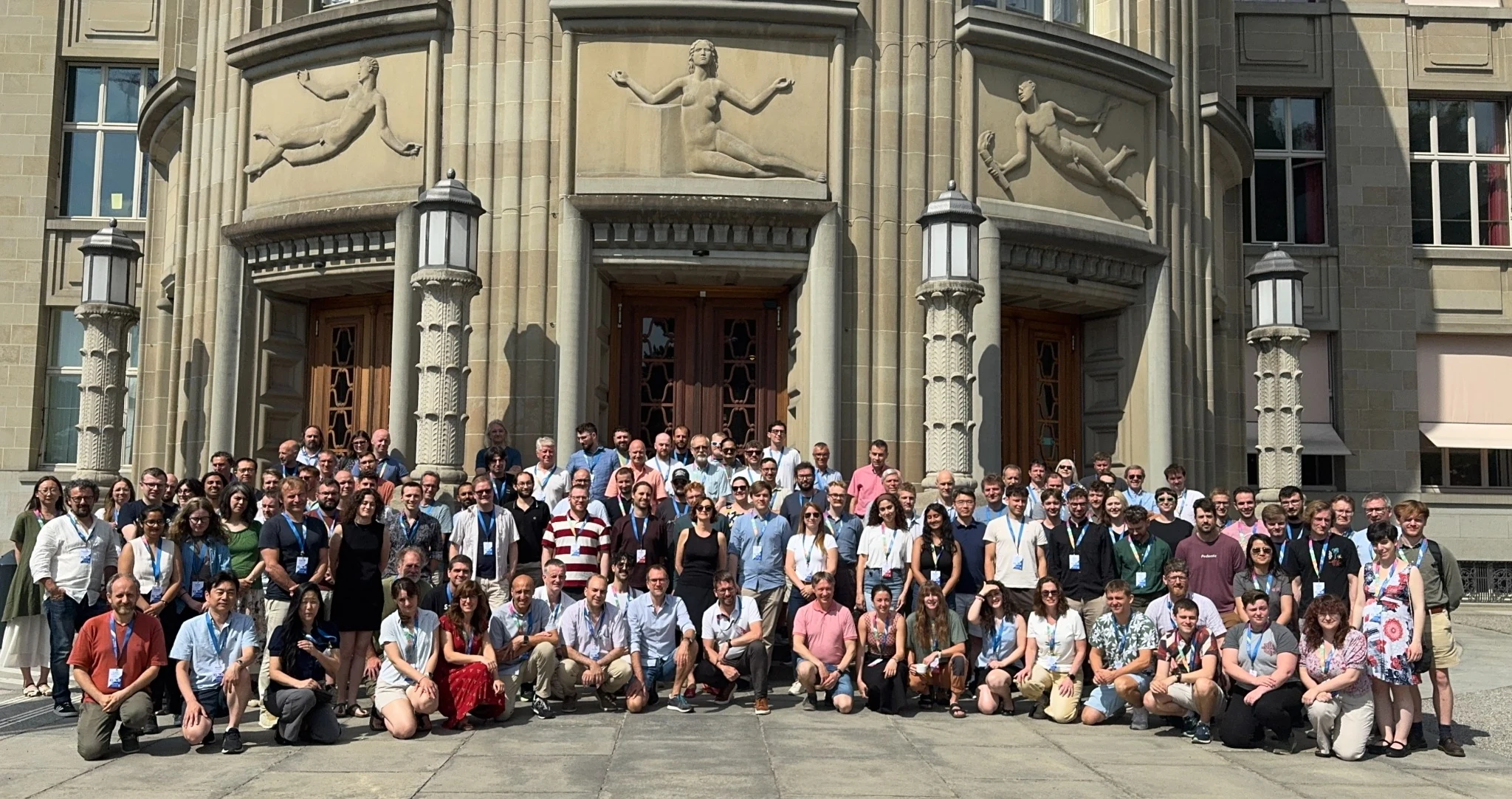
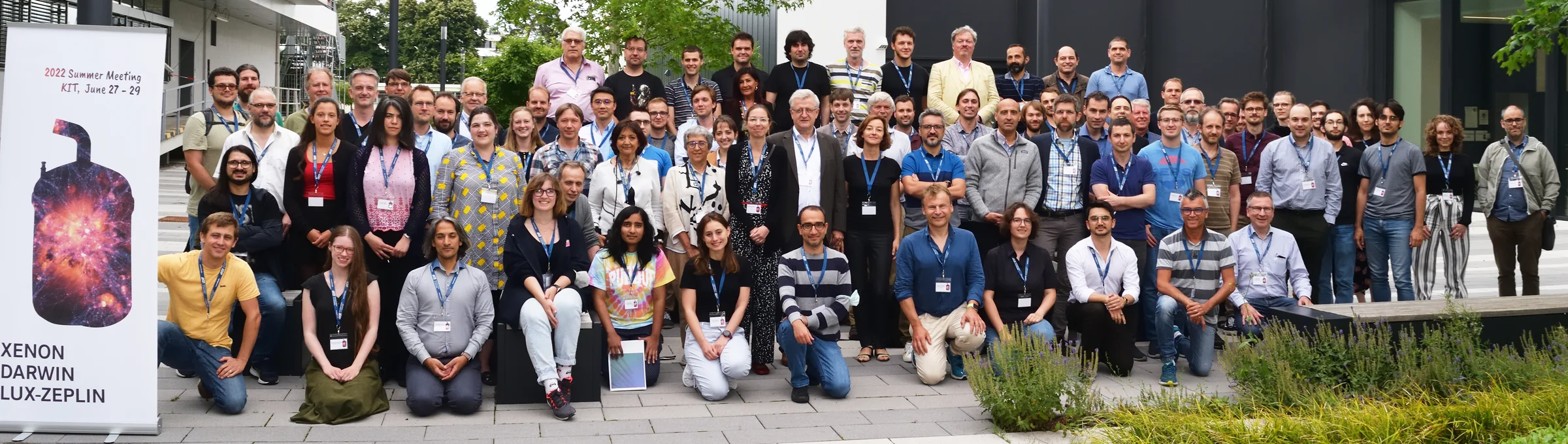
The most recent XLZD collaboration meeting took place from 29 June to 1 July 2026 at the University of Zurich, Switzerland. The meeting brought together collaborators across the science, detector, R&D and infrastructure programmes to review recent progress and discuss the next stages of the project. Sessions covered detector design and scaling, ongoing xenon-detector R&D, the evolving science case, site and infrastructure questions, and collaboration planning. The meeting also provided a valuable opportunity for in-person discussion across working groups as XLZD continues to develop as a next-generation rare-event observatory.
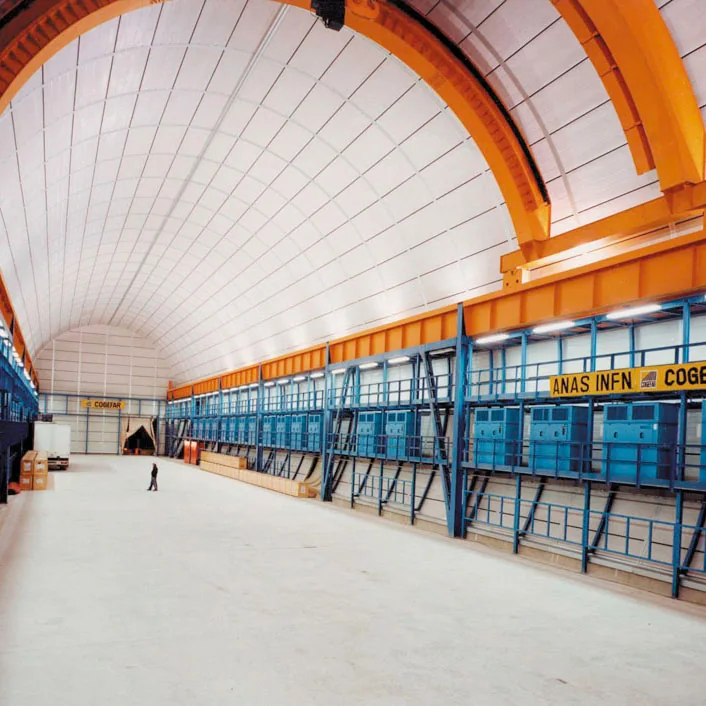
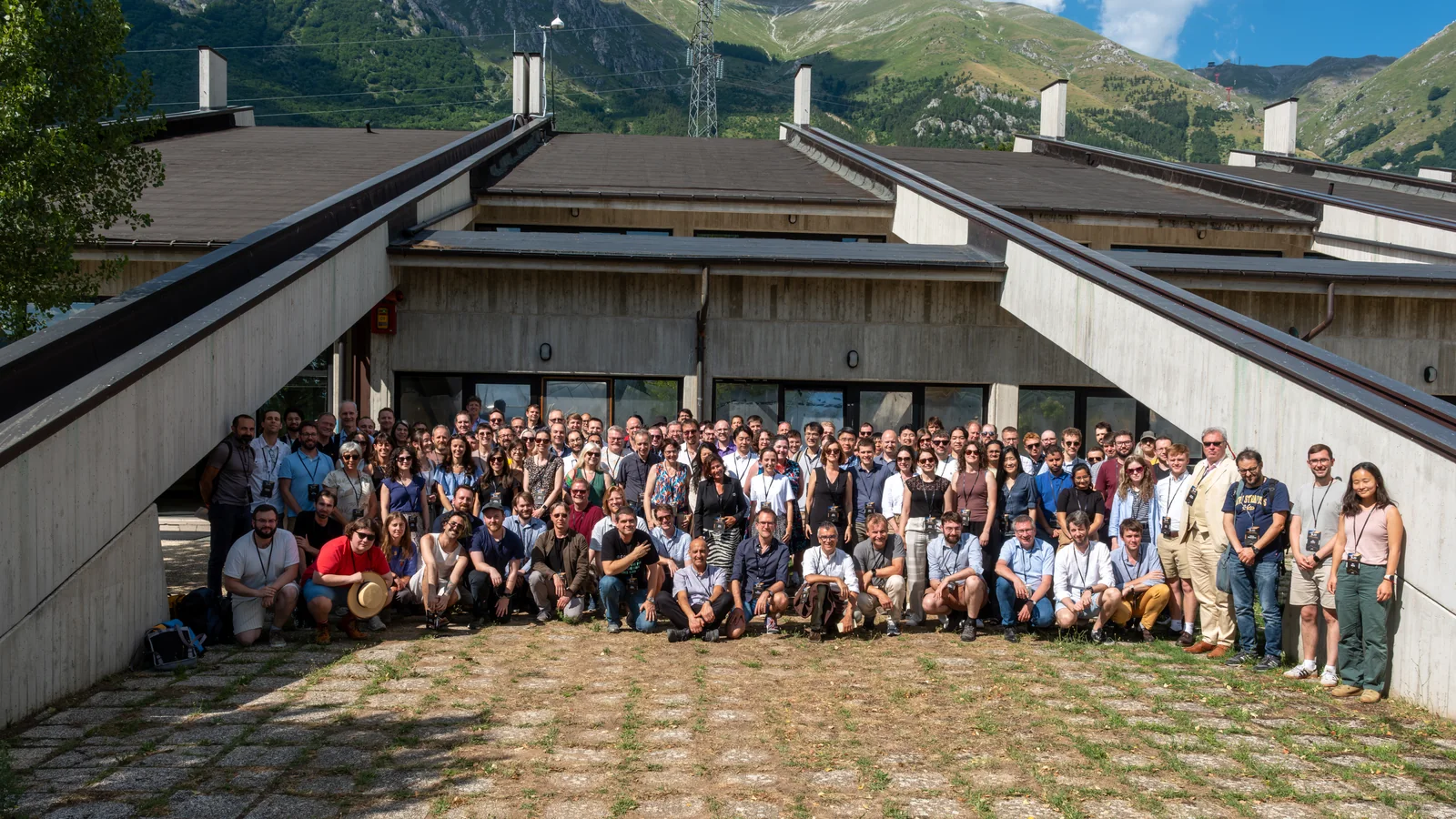
Read moreThe first meeting as an official collaboration was hosted by the Italian underground laboratory LNGS, from 30 June to 3 July. Topics included early design concepts, ongoing R&D, funding and siting, science requirements and much more. A visit through the underground lab, beneath the Gran Sasso mountain, offered a close look at the XENONnT detector, and the possible location XLZD could one day occupy.
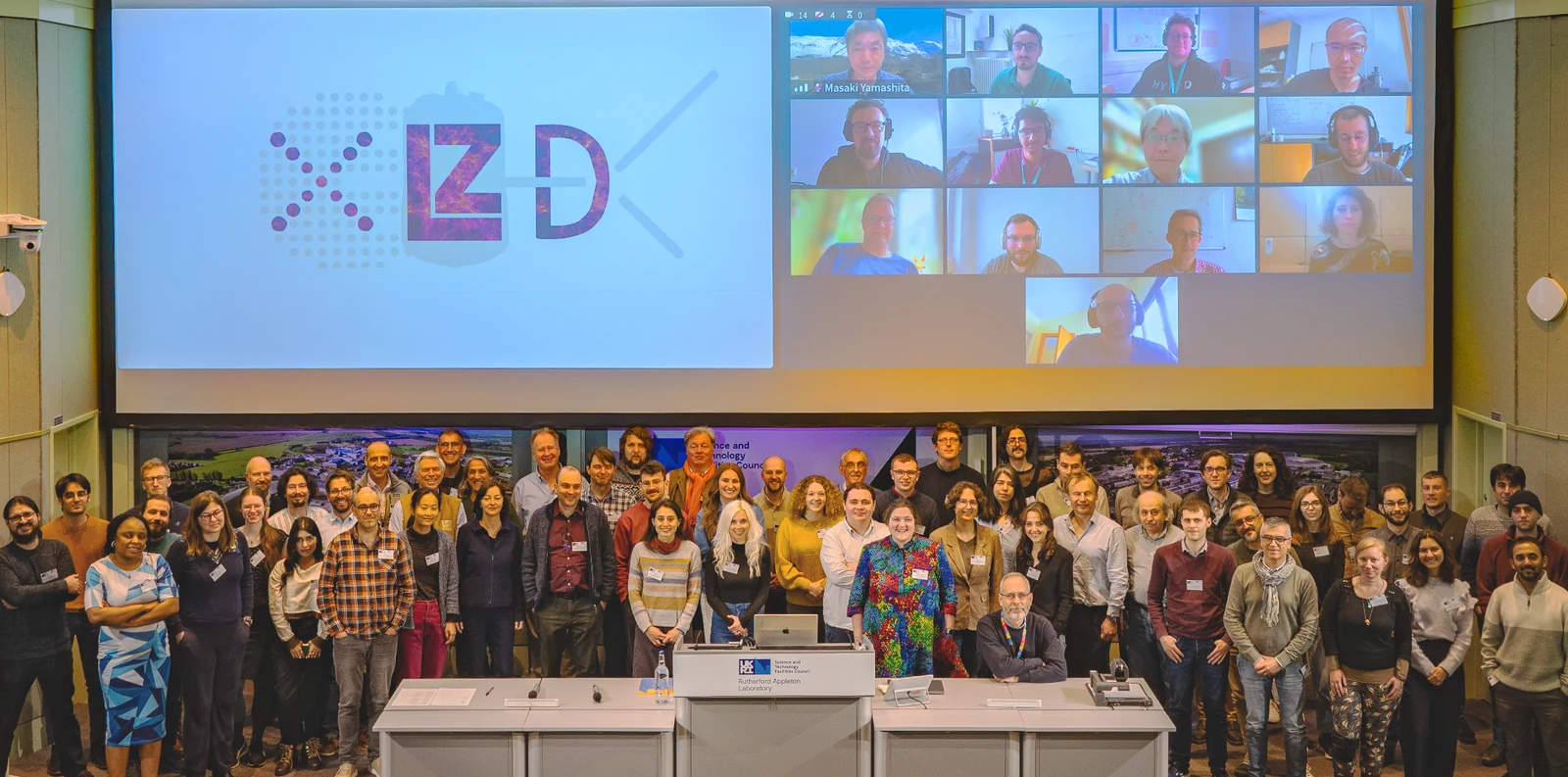
Read moreThe third joint meeting for the XLZD consortium (now XLZD Collaboration) took place from 15–19 April 2024 at the Rutherford Appleton Laboratory, at Harwell, UK. The detector design book and funding strategies were discussed in a broad forum. Excitement over the imminent formation of the future collaboration which will deliver this definitive instrument was also widespread. Find the agenda here.
Read moreCo-spokespeople
Speakers Committee
General Enquiries